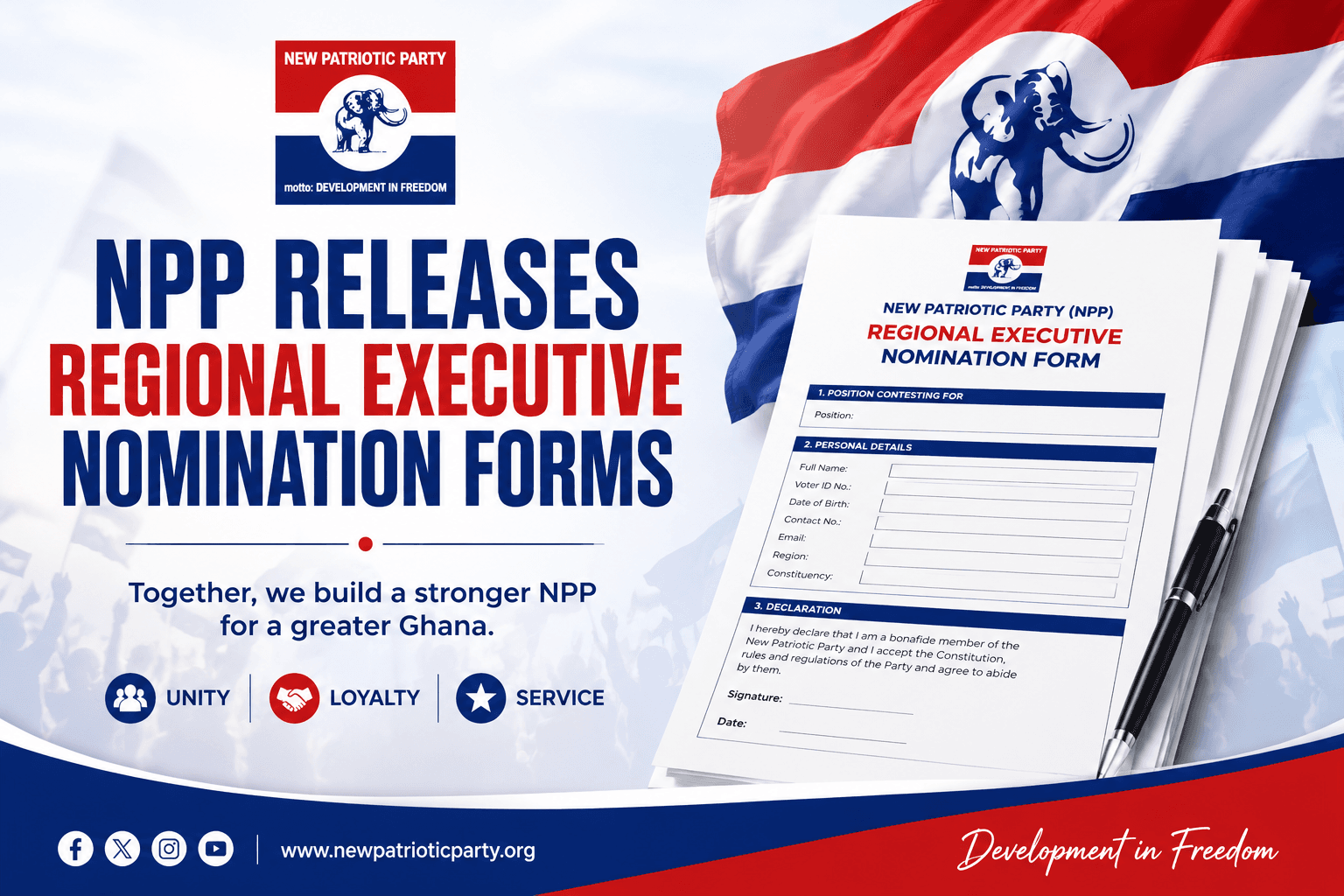
NPP Eases Nomination Process Amid High Traffic on Online Payment Platform

By Mackenzie Blankson
NPP Editorial Contributor


The New Patriotic Party has announced temporary measures to ensure a smooth and uninterrupted nomination process for constituency executive elections following increased traffic on the party’s online payment platform.
In a notice issued by the General Secretary, Justin Kodua Frimpong, Constituency Election Committees have been authorised to issue nomination forms to aspirants without requiring proof of payment at the point of collection.
The decision comes in response to delays being experienced on the party’s server due to the high volume of users accessing the nomination payment platform.
Under the new arrangement, aspirants can proceed to their respective constituency offices to obtain nomination forms. However, all aspirants will be required to present evidence of payment during the vetting process.
The party has encouraged all prospective aspirants to continue purchasing their nomination forms through the official NPP membership portal at https://member.nppghana.org.
To begin the process, applicants should visit the website and click the purchase forms button located below the login section. Aspirants will be prompted to verify their Voter ID details before proceeding with the nomination payment process. Upon successful verification and payment, the necessary records will be captured for validation during vetting.
The NPP remains committed to ensuring a transparent, efficient, and accessible nomination process for all eligible members seeking to contest various constituency executive positions.
Party members are encouraged to remain patient and cooperate with Constituency Election Committees as efforts continue to improve system performance and facilitate a seamless experience for all aspirants.
The party appreciates the understanding and cooperation of members during this period and remains focused on conducting successful, credible, and democratic internal elections across the country.

Listen to the Analysis
The Future Infrastructure Podcast: Episode 42
Sustainable Resilience
Beyond connectivity, the plan emphasizes ecological stewardship. By integrating smart-grid technology with regional solar arrays, the goal is to achieve energy independence while reducing the national carbon footprint by 30% over the next decade. The ripple effect on the manufacturing sector is expected to be profound, as lowered energy costs attract high-tech production.
format_quote“True progress is measured not by the height of our buildings, but by the breadth of the opportunities we create for every citizen.”
— President J.A. Kufuor (2004)